OUR ROAD MAP
OUR STRATEGIC SUSTAINABILITY ROADMAP
The updated 2023 materiality analysis has redefined the priority issues that Bell Holding will focus on in its sustainability strategy. This analysis process was developed by taking into account stakeholder views and global trends and supports Bell Holding in achieving its sustainability goals more effectively. Our sustainability strategy focuses on four strategic areas.
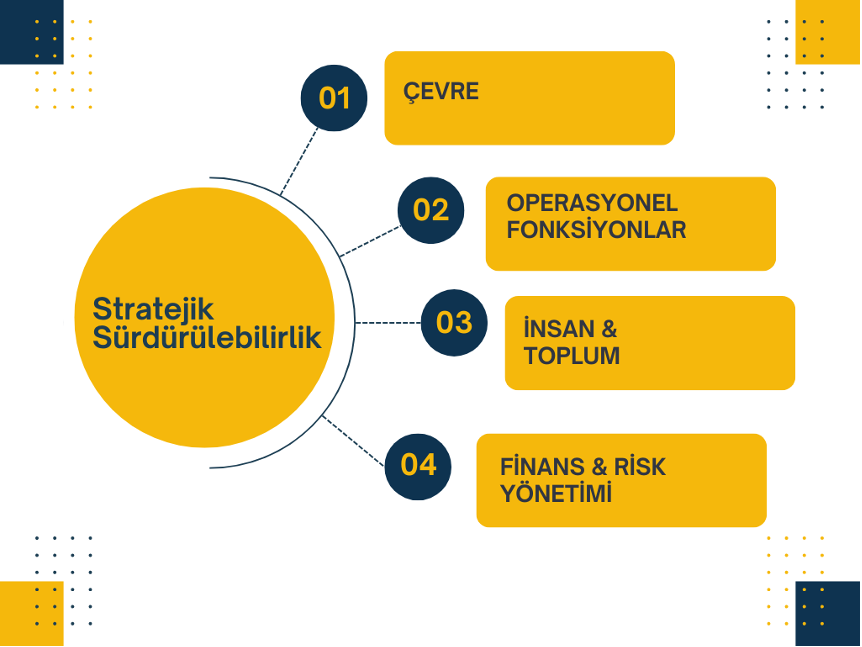
As Bell Holding, we aim to reduce our environmental footprint by 50% by 2035 in our plastic and aluminium packaging production processes with our packaging companies. As the first packaging group to sign the New Plastic Economy Global Commitment led by the Ellen MacArthur Foundation, we are taking an active role on a global scale in our goal of reducing plastic waste with our sustainable packaging solutions in line with our commitment to transition to a circular economy. We are proud to be a part of this important transformation with our goal of making 100% of our plastic packaging recyclable, reusable or compostable by 2035.
As the first group to implement the circular economy approach in its sector, we are collecting, recycling and re-packaging used packaging in a clean, separated manner at the source with our business model we developed in 2023. This step makes a significant contribution to the transformation of waste into valuable raw materials and the more efficient use of natural resources, and ensures the growth of the collection and recycling ecosystem in modern channels.
Our packaging companies aim to play an active role in the fight against climate change and minimise carbon emissions to limit the global temperature increase to 1.5°C. In line with this goal, we integrate emission management into all our companies with our Net Zero strategy and the roadmap we have determined to reduce our carbon footprint. We analyse our emissions based on 2022 and report them regularly every year. We set targets and strategies for the improvement of critical points where our emissions are intense, and in this process, we are guided by the Science Based Targets Initiative (SBTi).